



Bill of Materials (BOM) Preparation Services
A clear Bill of Materials connects design information with purchasing, fabrication, assembly, and project planning. Endeion provides bill of materials (BOM) preparation services for manufacturers, fabricators, contractors, product teams, and AEC organizations that need structured component and material data based on approved drawings, models, specifications, and project requirements.
Our BOM documentation can identify parts, raw materials, subassemblies, quantities, descriptions, sizes, specifications, and other agreed information needed to support procurement or production workflows. The scope may be coordinated with Endeion’s mechanical drafting, 3D modeling, assembly modeling, sheet metal documentation, quantity takeoff, BOQ, and cutting-list services when a project requires connected technical deliverables.
Every BOM is developed around the available source information and the client’s intended use. Endeion does not replace the purchasing team, fabricator, estimator, designer, or engineer of record. Instead, we organize approved technical information into a practical, reviewable document that helps project stakeholders work from a consistent material and component record.
Mechanical and Manufacturing BOMs
Mechanical BOMs are commonly prepared from 2D drawings, 3D part models, assembly models, sheet metal drawings, or approved equipment documentation. They help define what is required to manufacture or assemble a product, machine, enclosure, fabricated system, or equipment package. Structured assembly levels are especially useful when teams need to distinguish individual components from subassemblies and final assemblies.
Bill of Materials in Construction
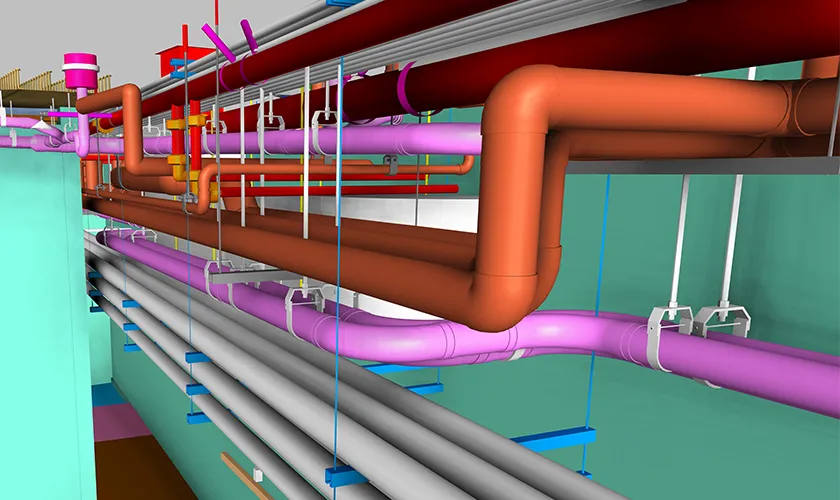
A bill of materials in construction organizes materials and components associated with a defined building, trade, system, fabrication package, or installation scope. Depending on the source documents, a construction bill of materials may cover structural components, fabricated metalwork, HVAC items, piping elements, equipment supports, building products, fit-out components, or other measurable project items.
The phrase BOM construction is sometimes used interchangeably with material takeoff or BOQ, but these documents serve different purposes. A BOM is generally component and assembly focused. A quantity takeoff measures materials from drawings or models, while a BOQ may organize quantities for bidding and commercial use. Endeion can coordinate these deliverables when the required scope and available information support them.
Bill of Materials (BOM) Services We Provide
Endeion’s bill of materials BOM services are tailored to the client’s documentation, workflow, and reporting requirements. The following services can be delivered individually or combined with related CAD and quantity documentation.
BOM Preparation and Component Breakdown
We prepare structured lists that identify approved materials, parts, subassemblies, and quantities. Information can be organized by assembly, system, drawing, zone, product type, fabrication package, or another agreed hierarchy. Clear item numbering and descriptions make the document easier to review and update.
Assembly and Multi-Level BOMs
For equipment and products with multiple assembly levels, Endeion can organize parent assemblies, subassemblies, and individual components into a logical hierarchy. Multi-level BOMs help teams understand where each part is used and support coordinated assembly documentation. The hierarchy is based on the approved model, drawings, or client-provided structure.
Construction Bill of Materials
For construction-related scopes, Endeion can develop material and component schedules from approved architectural, structural, civil, mechanical, or fabrication information. The output may support material planning, trade-package review, procurement preparation, or coordination with a separate takeoff or BOQ. Inclusion of labor, pricing, supplier selection, or installation productivity must be defined separately and is not assumed within a standard BOM.
Cutting Lists, BOQs, and Quantity Support
Where suitable design information is available, the BOM scope can be coordinated with cutting lists, Bills of Quantities, or material takeoffs. Cutting lists may identify piece dimensions and quantities for specified fabrication items. BOQs and takeoffs can provide broader measured quantities for bidding or planning. These related documents are prepared according to the agreed project scope and should be reviewed against current drawings and specifications before purchasing or fabrication.
BOM Analysis Services
Endeion’s BOM analysis services focus on reviewing the structure and consistency of BOM data against the available technical references. Depending on the assignment, checks may identify duplicate item numbers, missing descriptions, inconsistent units, quantity mismatches, unclear assembly relationships, outdated revisions, or gaps between the BOM and associated drawings. The review does not certify engineering design, vendor pricing, material suitability, or procurement decisions.
BOM Formatting and Data Organization
BOMs can be arranged in an agreed spreadsheet or tabular format for easier integration into the client’s internal workflow. Columns, naming conventions, item coding, revision fields, and category structures can be customized when requirements are provided at the start of the project. Compatibility with a specific ERP, MRP, estimating, or procurement platform should be tested by the client unless system integration is explicitly included in the scope.
Information That Can Be Included in a BOM
The final fields should reflect how the BOM will be used. Adding unnecessary data increases review effort, while missing essential fields can limit the document’s value. Typical information may include:
| BOM Field | Typical Use |
|---|---|
| Item or line number | Provides a consistent reference for discussion, review, and revisions. |
| Part number or identifier | Connects the component to drawings, models, or the client’s naming system. |
| Description | Explains the component or material in clear project terminology. |
| Quantity and unit | States the required count, length, area, volume, weight, or other agreed measure. |
| Material or specification | Records material information shown in approved project documents. |
| Assembly level | Shows whether an item belongs to a parent assembly or subassembly. |
| Drawing or model reference | Supports traceability back to the source technical information. |
| Revision or status | Helps teams identify which issue of the source information was used. |
| Notes or procurement fields | Adds agreed project notes or client-supplied purchasing information. |
Our Bill of Materials Preparation Process
A controlled workflow helps maintain traceability between the BOM and the source documents. Endeion adapts the following process to the assignment, document quality, and required output.
1. Scope and Purpose Review
We confirm whether the BOM is intended for fabrication, assembly, purchasing preparation, bidding support, construction documentation, maintenance reference, or another defined use. Required fields, formats, exclusions, and responsibilities are recorded before production.
2. Source-File Assessment
Our team reviews the available 2D drawings, 3D models, assembly files, specifications, legacy BOMs, schedules, and client standards. Missing, conflicting, or unclear information is identified for clarification rather than assumed.
3. Structure and Naming Setup
We establish the agreed item hierarchy, numbering system, descriptions, units, categories, revision fields, and drawing references. For a multi-level BOM, parent and child relationships are defined at this stage.
4. Data Extraction and Preparation
Components and materials are identified from the approved source files. Quantities and attributes are entered into the BOM using the agreed format. Related cutting-list, BOQ, or takeoff information is added only when included in the project scope.
5. Quality-Control Review
The draft is checked for quantity consistency, duplicated items, missing fields, units, naming, assembly relationships, and traceability to the supplied references. Questions that require client, designer, estimator, or fabricator input are documented.
6. Client Review and Revisions
The BOM is issued for review at the agreed milestone. Confirmed comments and updated source documents are incorporated while maintaining revision control.
7. Final Delivery
Approved deliverables are organized in the required file format with the agreed naming and revision status. Future updates can be scoped when design or assembly information changes.
Bill of Materials Advisory and Consulting Support
Some clients need help defining the BOM before they need the finished document. Endeion can provide bill of materials advisory services focused on documentation scope, source-file readiness, field selection, hierarchy, naming conventions, revision control, and coordination with CAD deliverables.
Our BOM consulting services are technical documentation support rather than commercial procurement consulting. We can help determine whether a single-level or multi-level BOM is more appropriate, what information can be extracted from the available drawings or models, which fields should be supplied by the client, and whether a BOQ, cutting list, or material takeoff is also needed.
This limited BOM advisory scope can reduce ambiguity before production begins. Final purchasing strategy, supplier selection, unit costs, engineering decisions, material approvals, and contractual quantities remain with the authorized project stakeholders unless a separate service is expressly agreed.
Industries and Applications We Support
Endeion’s BOM services can support projects where structured component and material documentation is needed. The exact deliverable depends on the approved project information and requested scope.
Product Manufacturing and Industrial Equipment
Parts, subassemblies, fasteners, purchased components, sheet metal items, and fabricated assemblies for machines, equipment, enclosures, and product systems.
Construction and Building Products
Construction bill of materials for defined architectural, structural, mechanical, fit-out, building-product, or installation packages.
Sheet Metal and Fabrication
Material lists, part schedules, assembly BOMs, and cutting-list coordination based on approved drawings and models.
Commercial and Residential Projects
Component and material schedules for selected building systems, equipment supports, cabinetry, HVAC items, fixtures, or repeatable project elements.
Healthcare and Educational Facilities
Defined equipment, enclosure, furniture, laboratory, MEP, or building-component packages based on client-approved information.
Infrastructure, Energy, and Utility Projects
Material and component documentation for selected fabricated systems, supports, equipment, structural items, or utility-related packages.
Automotive and Aerospace Components
Part and assembly lists prepared from approved engineering information for defined mechanical or fabricated scopes.
Why Choose Endeion for Bill of Materials Services?
Connected CAD and BOM Support
BOM preparation can be coordinated with Endeion’s mechanical drafting, 3D part modeling, assembly modeling, sheet metal drawing, quantity takeoff, BOQ, and cutting-list services when those deliverables are included.
Customizable Documentation
Fields, categories, item hierarchies, numbering, units, and output formats can be adapted to the agreed client requirements rather than forcing every project into a generic template.
Scope-Based Quality Control
Checks are performed against the source documents and acceptance criteria defined for the assignment. Questions and information gaps are documented for review instead of being silently assumed.
Support for Different Project Sizes
Endeion can support a single assembly, selected fabrication package, product family, or broader set of component schedules based on available capacity and project scope.
Collaborative Review Process
Milestone reviews help client teams confirm descriptions, quantities, material data, assembly structures, and required revisions before final delivery.
FAQs
What are bill of materials (BOM) preparation services?
Bill of materials (BOM) preparation services convert approved drawings, models, specifications, and component information into a structured list of materials, parts, subassemblies, quantities, and related fields. The document can support purchasing preparation, fabrication, assembly, documentation, or project planning.
What information is required to prepare a BOM?
Useful inputs may include 2D drawings, 3D part and assembly models, specifications, existing parts lists, material data, client naming standards, required fields, revision information, and the intended use of the BOM. Endeion reviews the available files and identifies missing or unclear information before production.
What is the difference between a BOM and a BOQ?
A BOM is usually organized around parts, materials, components, and assembly relationships. A BOQ is generally organized around measured construction work and quantities for estimating or tendering. Some projects require both, but the scope and source information should be defined separately.
Can Endeion prepare a construction bill of materials?
Yes, Endeion can prepare a construction bill of materials for a defined component, trade, fabrication, equipment, or installation scope when suitable drawings, models, and specifications are provided. The BOM does not automatically include labor, pricing, supplier selection, or contractual measurement.
Does Endeion provide BOM analysis services?
Endeion can review BOM structure and consistency against the available technical references. Checks may include duplicated items, missing fields, inconsistent units, quantity differences, unclear assembly levels, or outdated drawing references. Engineering validation and procurement approval remain with the responsible parties.
Can BOM formats be customized?
Yes. The column structure, item numbering, hierarchy, units, categories, drawing references, and revision fields can be adapted to agreed requirements. Compatibility with a specific ERP, MRP, or procurement system should be tested by the client unless integration is included in the scope.
Can a BOM support cost reduction?
A well-structured BOM can improve material visibility, reduce manual data handling, and help teams identify omissions or duplicates during review. Actual savings depend on design accuracy, procurement decisions, supplier pricing, fabrication methods, waste factors, and project management. Endeion does not guarantee cost reductions.
Can BOM preparation be combined with mechanical drafting or 3D modeling?
Yes. When required, Endeion can coordinate BOM preparation with mechanical drafting, part modeling, assembly modeling, sheet metal documentation, or other approved CAD deliverables. Each service should be clearly included in the project scope.
How are BOM revisions managed?
The BOM can be updated against revised source drawings or models through an agreed revision process. Clear file naming, revision dates, status fields, and review comments help teams understand which technical issue was used for each BOM release.
Does Endeion make purchasing or engineering decisions?
No. Endeion prepares and reviews technical documentation based on approved project information. Material approval, supplier selection, pricing, engineering design, regulatory compliance, contractual quantities, purchasing authorization, and fabrication decisions remain with the appropriate client and project stakeholders.