


BIM for Facility Management
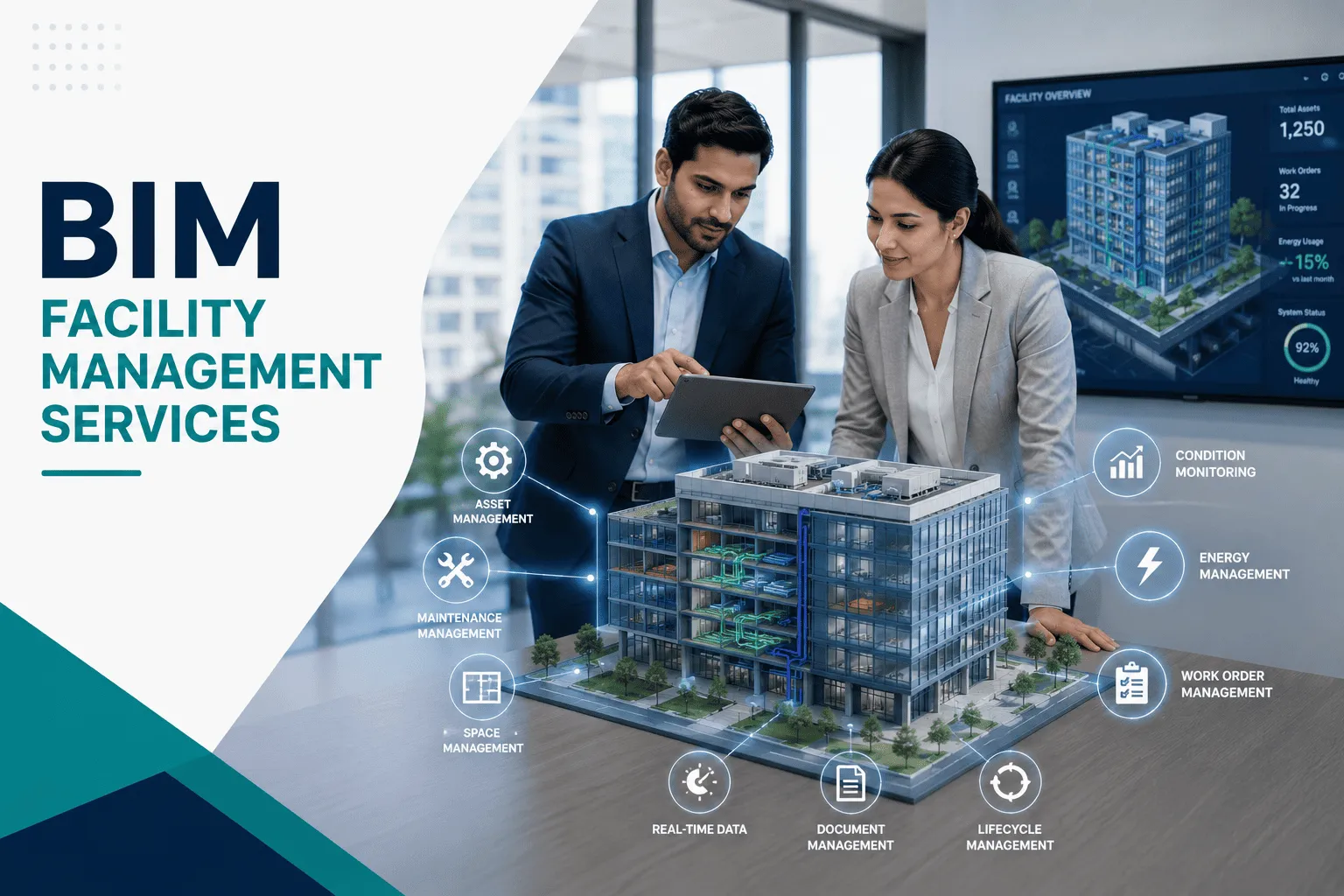
Endeion provides BIM for facility management services that help owners and facility teams turn project models into practical operational resources after handover. Instead of leaving BIM as a design-and-construction archive, we prepare data-rich models that can support asset tracking, preventive maintenance, space planning, renovations, lifecycle decisions, compliance records, and integration with facility-management systems.
Our BIM facility management scope can begin with a newly handed-over model or an existing building model that needs to be reviewed, updated, and enriched for operational use. Endeion can assess model quality, organize asset information, add agreed FM parameters, validate equipment data, update selected existing conditions, and prepare model and data outputs for connection with CMMS, CAFM, IWMS, or asset-management platforms.
Facility management using BIM works best when the operational requirements are defined before model enrichment begins. Endeion therefore starts with the information that facility managers actually need: which assets must be tracked, what maintenance data is required, how spaces are managed, which identifiers connect BIM to operational systems, and how updates will be maintained after handover.
What Is BIM for Facility Management?
BIM for facility management is the use of a structured digital building model and its linked asset information to support the operational phase of a facility. The model can provide a visual and data-based reference for spaces, equipment, systems, locations, warranties, service requirements, documents, and other information needed after construction.
Using BIM in facilities management does not mean that every maintenance activity happens inside the BIM authoring software. In many workflows, BIM acts as the spatial and asset-information layer while work orders, inspections, preventive maintenance schedules, service histories, and portfolio reporting are managed through CMMS, CAFM, IWMS, or dedicated asset-management systems.
The role of BIM in facility management is therefore to make facility information easier to locate, understand, verify, and connect. A useful FM model should be structured around operational questions such as: Where is the asset? What system does it belong to? What is its identifier? What maintenance does it require? What documents are associated with it? What information must remain current for future replacements or renovations?
Our BIM Facility Management Services
FM-Ready BIM Model Creation
Endeion can prepare BIM models for facilities management use from coordinated project models, record models, point cloud information, approved drawings, or existing BIM files. The required geometry, asset categories, model organization, parameters, identifiers, and information level are defined according to the intended operational use rather than inherited automatically from the construction model.
Existing BIM Model Assessment and Cleanup
Construction models often contain information that is useful for coordination but unnecessary for ongoing operations, while important FM data may be incomplete or inconsistent. Endeion can review an existing model for asset coverage, duplicate elements, naming, classification, model organization, parameter availability, space data, system relationships, and suitability for downstream facility workflows.
Asset Data Enrichment and Validation
We can enrich selected assets with agreed information such as equipment IDs, manufacturer and model references, installation dates, warranty details, maintenance frequencies, replacement planning data, document references, and other client-defined properties. BIM facility management data is checked against available asset registers, schedules, COBie data, O&M records, commissioning information, and other approved sources.
Model Updates for Existing Facilities
For operating buildings, facility information changes over time as rooms are modified, equipment is replaced, systems are upgraded, and renovations are completed. Endeion can update defined model areas from approved redlines, survey information, point cloud data, maintenance records, or renovation documentation so the operational model remains aligned with the information available to the facility team.
FM System Integration Support
Endeion can prepare BIM and asset data for integration with compatible CMMS, CAFM, IWMS, and asset-management platforms. This may include identifier mapping, field mapping, asset-register alignment, space coding, export preparation, and validation of required data structures. Actual integration depends on the receiving platform, available APIs or import formats, client system configuration, and agreed technical responsibilities.
How BIM Supports Ongoing Facility Operations
Asset Tracking and Equipment Information
BIM for facility managers provides a visual way to locate assets and understand their relationship to rooms, systems, and surrounding building components. Equipment can be associated with identifiers, type information, manufacturer data, warranty references, service documentation, and other records required by the owner.
Preventive Maintenance Planning
When maintenance information is structured and connected to asset identifiers, facility teams can use BIM data to support preventive maintenance planning. The model can help technicians locate equipment, review access conditions, understand connected systems, and reference maintenance requirements before visiting the asset. Work-order scheduling and maintenance histories normally remain within the connected CMMS, IWMS, or asset-management platform.
Space Management
BIM facilities management can support room and space records by maintaining usable floor areas, room identifiers, occupancy information, departments, functional zones, and other agreed space attributes. This helps owners review allocations, moves, changes, occupancy planning, renovation impacts, and portfolio-level space information when the model is connected to the relevant operational workflow.
Energy and Building Performance Information
BIM can support energy-management workflows by organizing information about spaces, equipment, systems, and building components that may be relevant to performance analysis. When integrated with suitable building-management, metering, analytics, or energy platforms, the model can provide useful spatial context for investigating consumption patterns, equipment performance, or retrofit opportunities. Real-time monitoring requires separate operational systems and data connections; it is not produced by the BIM model alone.
Lifecycle and Replacement Planning
Facilities management using BIM can help owners maintain structured information about asset age, expected service life, warranty periods, replacement status, and related capital-planning data. This creates a clearer digital reference for planning equipment renewal, system upgrades, major maintenance, and future investment decisions.
Renovations, Retrofits, and Future Projects
An updated operational BIM model can reduce the amount of information future project teams need to reconstruct when planning renovations or facility upgrades. The model can provide a reference for existing spaces, assets, equipment rooms, system routes, and documented conditions, subject to the reliability of the information maintained by the owner.
Compliance, Inspections, and Record Access
BIM in facility management can help organize records used during inspections, audits, planned maintenance, and compliance-related workflows. Asset documents, certificates, inspection references, warranties, and related information can be associated with model elements or linked data structures where required. BIM supports record accessibility, but it does not replace regulatory inspection, certification, or compliance responsibilities.
Advantages of Using BIM for Facility Management
| Operational Advantage | How BIM Supports It |
|---|---|
| Centralized Asset Context | Connects asset and space information to a visual building model rather than relying only on separate lists and documents. |
| Faster Asset Location | Helps facility teams find equipment, rooms, systems, and related documents more efficiently. |
| Preventive Maintenance Support | Provides structured asset information that can support maintenance planning when linked to operational systems. |
| Better Space Visibility | Maintains room and space data for allocation, moves, renovations, and portfolio planning. |
| Lifecycle Planning | Organizes asset age, warranty, replacement, and service-life information for long-term planning. |
| Renovation Readiness | Provides a maintained digital reference that can support future upgrades, retrofits, and space changes. |
| Improved Data Continuity | Carries verified project and handover information into the operational phase when data requirements are defined and maintained. |
Integrating BIM with CMMS, CAFM, IWMS, and Asset-Management Platforms
Using BIM for operations and facilities management usually requires coordination between the model and the software already used by the facility organization. The BIM model provides spatial and asset context, while the operational platform manages functions such as work orders, maintenance schedules, service histories, space requests, inspections, inventory, or portfolio reporting.
CMMS Integration
A Computerized Maintenance Management System typically manages work orders, preventive maintenance, service histories, parts, and maintenance activities. Endeion can help align BIM asset identifiers and agreed equipment properties with the CMMS import or integration structure so technicians can move between spatial model context and maintenance records.
CAFM Integration
Computer-Aided Facility Management platforms commonly support space, occupancy, asset, and facility-service workflows. BIM can provide floor, room, zone, and equipment context, while the CAFM system manages operational records and requests. Space coding and asset identifiers should be standardized before data exchange.
IWMS Integration
Integrated Workplace Management Systems can combine real estate, space, maintenance, capital-project, sustainability, and workplace functions. For an IWMS workflow, Endeion can structure BIM space and asset information around the agreed fields and identifiers required by the organization’s platform.
Asset-Management Platform Integration
Dedicated asset-management systems may track equipment condition, inspections, lifecycle status, replacement plans, and financial or operational attributes. BIM can provide the spatial relationship and model reference while the asset platform remains the system of record for ongoing management.
Integration methods differ between platforms. Depending on the software environment, data may be exchanged through spreadsheets, COBie, IFC, database exports, APIs, middleware, or vendor-specific connectors. Endeion defines the data preparation and mapping scope based on the receiving system rather than promising a universal one-click connection.
Our BIM for Facility Management Process
1. Facility Information Requirements Review
We review operational goals, asset categories, space requirements, maintenance needs, identifiers, document requirements, FM software, existing standards, and final model or data deliverables.
2. Existing Model and Data Assessment
The available BIM model, asset register, COBie data, schedules, O&M records, commissioning information, and other source files are assessed for completeness, consistency, model organization, and suitability for FM use.
3. FM Model Structuring and Data Enrichment
The model is cleaned or restructured as required, and agreed asset, space, warranty, maintenance, lifecycle, document, and classification information is added or mapped from approved sources.
4. Operational System Mapping and Integration Preparation
Asset IDs, room codes, field names, classifications, and required export structures are aligned with the client’s CMMS, CAFM, IWMS, or asset-management platform.
5. Model and Asset Data Validation
Endeion checks required fields, duplicate assets, identifiers, locations, model-to-register relationships, naming, data completeness, and agreed operational information before handover.
6. FM Handover and User Transition
The FM-ready model, asset data, mapping files, validation records, and supporting documentation are delivered in the agreed format. Where included, Endeion can also support model-update procedures and user guidance for maintaining the information after handover.
Typical Inputs and FM Deliverables
| Category | Typical Inputs | Typical Outputs |
|---|---|---|
| BIM / Geometry | Revit models, IFC files, record models, point clouds, drawings | FM-ready BIM model, cleaned model views, agreed asset and space structure |
| Asset Information | Asset registers, COBie data, equipment schedules, commissioning records | Validated asset register, identifiers, manufacturer/model fields, lifecycle attributes |
| Maintenance Information | O&M manuals, maintenance schedules, warranty data, task information | Mapped maintenance fields, warranty references, document links, operational data tables |
| Space Information | Room schedules, departmental data, occupancy or zone records | Structured room, space, zone, and agreed allocation information |
| System Integration | CMMS/CAFM/IWMS field lists, import templates, API or connector requirements | Mapped export files, field crosswalks, identifier alignment, integration-ready data package |
Facilities That Can Benefit from BIM Facility Management
Commercial and Mixed-Use Buildings
Office, retail, and mixed-use facilities can use BIM to organize spaces, tenant areas, shared assets, plant rooms, and building-service information.
Healthcare and Institutional Facilities
Hospitals, clinics, laboratories, and institutional buildings can benefit from structured asset, room, equipment, service, and maintenance information.
Educational Campuses
Schools, universities, and research facilities can use BIM to manage building spaces, equipment, renovation records, and campus asset information.
Hotels and Hospitality Facilities
Hotels, resorts, and leisure properties can maintain guest-area, back-of-house, plant, equipment, and space information in a coordinated digital model.
Industrial and Manufacturing Facilities
Industrial sites can use BIM to organize facility equipment, service spaces, utility systems, maintenance records, and renovation information where model scope supports those uses.
Existing Buildings and Portfolios
Older facilities can be brought into an FM BIM workflow using available drawings, surveys, point clouds, asset registers, and verified field information. Portfolio use requires consistent data standards across facilities.
Why Choose Endeion for BIM Facility Management Services?
Operationally Focused BIM Delivery
Endeion structures models around facility use rather than simply handing over construction geometry and unused project data.
Asset and Space Data Validation
We review asset identifiers, model locations, registers, spaces, and agreed FM fields against available source information before final delivery.
BIM-to-FM Handover Experience
Endeion also supports COBie and BIM-to-FM workflows, helping connect project closeout information with the operational requirements of facility teams.
Existing-Facility Model Updates
Models can be updated from suitable record information, point clouds, redlines, surveys, or renovation documentation when existing conditions need to be reflected.
Integration-Oriented Data Structuring
Asset and space information can be prepared around the field and identifier requirements of compatible CMMS, CAFM, IWMS, and asset-management systems.
Scope-Based FM Solutions
The required assets, data fields, integrations, update procedures, and deliverables are defined around the client’s actual operational goals rather than a generic FM model package.
FAQs About BIM for Facility Management
What is BIM for facility management?
BIM for facility management is the use of a data-rich digital building model to support asset, space, maintenance, lifecycle, renovation, and operational information after project handover.
How do facility managers use BIM in daily operations?
Facility managers can use BIM to locate assets, review equipment and space information, access linked documents, understand system relationships, and support maintenance or renovation planning. Work orders and service histories are usually managed in connected operational software.
How can BIM support preventive maintenance?
BIM can organize asset identifiers, locations, equipment data, warranty information, maintenance requirements, and document references. When mapped to a CMMS or similar platform, this information can support preventive-maintenance planning and technician access.
Can BIM be integrated with CMMS, CAFM, or IWMS software?
Yes, where the receiving platform supports suitable import, API, connector, or data-exchange methods. Endeion can prepare identifiers, fields, asset registers, space codes, and mapping files for the agreed integration workflow. Compatibility depends on the specific software environment.
What information is needed to create an FM-ready BIM model?
Typical inputs include a coordinated or record BIM model, asset register, equipment schedules, COBie data, O&M manuals, warranties, commissioning records, space requirements, maintenance information, and the data fields required by the facility-management platform.
Can Endeion update an existing BIM model for facility management?
Yes. Endeion can assess and update suitable existing models using approved drawings, redlines, point clouds, surveys, asset records, and renovation information. The update scope and reliability depend on the quality of the source information.
What is the role of COBie in BIM facility management?
COBie can provide a structured handover dataset for spaces, assets, systems, documents, warranties, and maintenance-related information. BIM facility management uses approved handover data as part of a broader operational workflow after the project is complete.
Can BIM support energy management?
BIM can provide structured information and spatial context for equipment, spaces, and building systems. Energy monitoring or live performance analysis requires separate metering, BMS, analytics, or energy platforms that can be linked or compared with BIM information.
How does BIM help with renovations and lifecycle planning?
A maintained BIM model gives future project teams a digital reference for spaces, assets, and documented building conditions. Lifecycle fields can also support replacement planning, warranty review, and capital-upgrade decisions when the information is maintained accurately.
What are the main advantages of using BIM for facility management?
Key advantages include easier asset location, better organization of facility information, support for preventive maintenance, clearer space records, lifecycle planning, improved renovation readiness, and stronger continuity between construction handover and ongoing operations.
Use BIM as a Long-Term Facility Information Resource
The value of BIM does not have to end when construction is complete. With the right asset structure, operational data, validation, and system connections, BIM can remain useful throughout the building lifecycle as a visual and information-rich reference for facility teams.
Endeion helps owners and operators move from a project model to an FM-ready information environment. Share your current BIM files, asset records, facility-management software, and operational priorities, and our team can define the model updates, data enrichment, validation, and integration preparation needed for your facility.
Areas We Serve
- Alabama
- Albany
- Arizona
- Atlanta
- Augusta
- Bakersfield
- Boston
- Brownsville
- Buffalo
- California
- Charlotte
- Chicago
- Cleveland
- Colorado
- Columbia
- Columbus
- Concord
- Connecticut
- Dallas
- Florida
- Georgia
- Hawaii
- Houston
- Illinois
- Indiana
- Kansas
- Kentucky
- Los Angeles
- Louisiana
- Maine
- Maryland
- Massachusetts
- Mississippi
- Missouri
- Montana
- Nebraska
- Nevada
- New Hampshire
- New Mexico
- New York
- North Carolina
- North Dakota
- Ohio
- Oklahoma
- Oregon
- Orlando
- Pennsylvania
- Portland
- Rhode Island
- Seattle
- South Carolina
- Texas
- Vermont
- Virginia
- Washington
- West Virginia
- Wisconsin