
Clash Detection Service for BIM Coordination and Construction Planning
Endeion provides BIM-based clash detection service support for architects, engineers, general contractors, trade contractors, infrastructure teams, and project managers who need to identify spatial conflicts before they become field problems. By reviewing architectural, structural, MEP, utility, and civil models together, our team helps project stakeholders understand where systems intersect, where required clearances are missing, and which issues need coordination before construction or installation progresses.
Our BIM clash detection service can be used during design development, preconstruction, trade coordination, model auditing, shop drawing preparation, renovation planning, and infrastructure coordination. The scope can include model federation, rule-based clash tests, BIM clash identification, issue categorization, coordination reports, revision tracking, and rechecking after approved changes are incorporated. The exact process is defined around the project inputs, disciplines involved, model maturity, software environment, and required deliverables.
Rather than treating every model intersection as an error, Endeion reviews clash results in context. Some clashes are genuine construction conflicts, while others may be acceptable overlaps, modeling tolerances, duplicated elements, or coordination items that require a decision from the responsible design or trade team. This practical approach helps project teams focus on issues that can affect constructability, access, sequencing, or installation.
What Is Clash Detection in BIM?
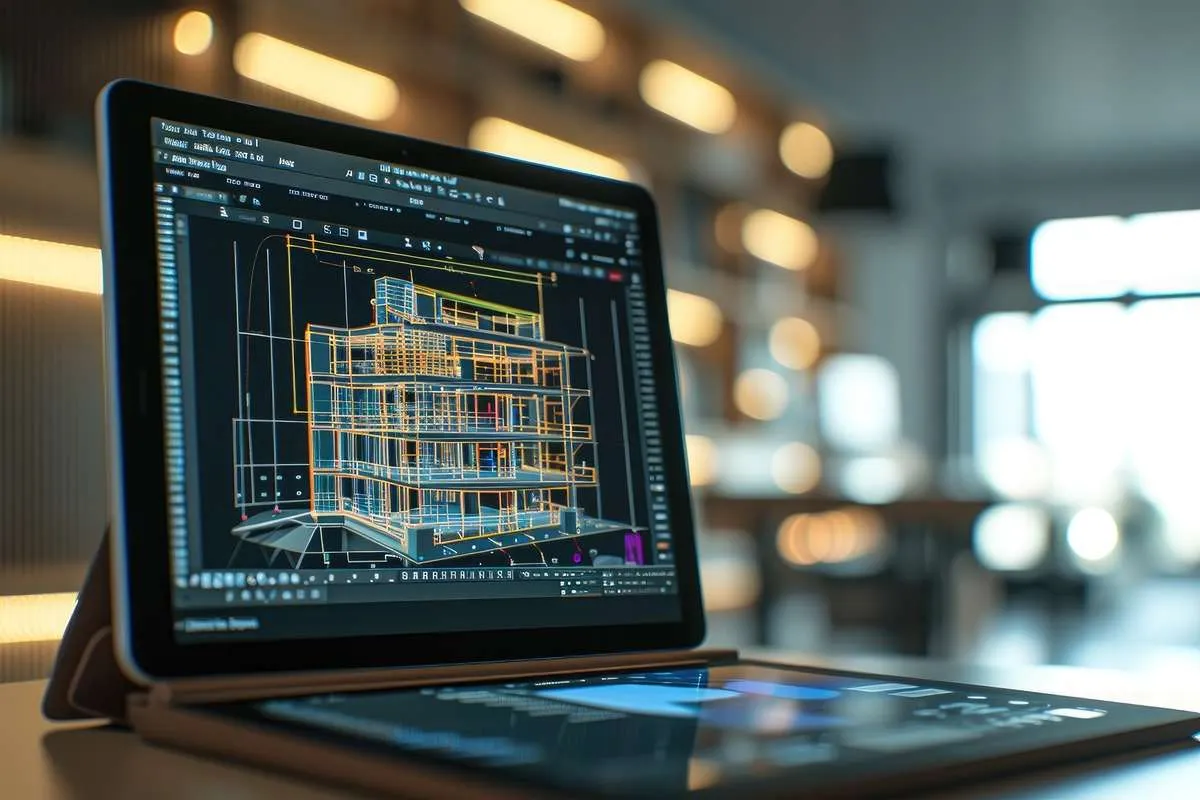
Clash detection is the process of comparing digital building or infrastructure models to identify conflicts between elements that occupy the same space or violate defined clearance and access requirements. In BIM, clash detection is commonly performed by federating discipline models and applying rule-based tests between selected systems, zones, or element categories.
For teams asking what is clash detection in BIM, the key point is that the software finds potential conflicts, but the coordination team must still interpret them. A BIM clash may involve ductwork intersecting a beam, a pipe crossing an electrical cable tray, a utility route conflicting with a foundation, or equipment placed without sufficient service clearance. The result becomes useful only when it is reviewed, assigned, resolved, and rechecked.
What is BIM clash detection in practical construction terms? It is a structured quality and coordination workflow that connects model review with construction conflict resolution. It does not replace engineering design or trade approval. Instead, it gives the responsible teams clearer spatial information so they can make decisions before installation.
Types of Clashes in BIM
Understanding the types of clashes in BIM helps project teams build more useful clash rules and avoid overwhelming coordination meetings with low-value results.
Hard Clashes
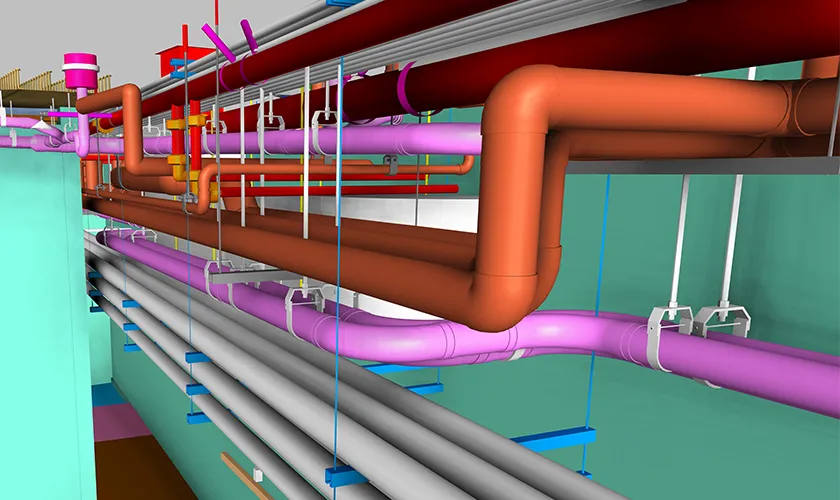
A hard clash occurs when two modeled elements physically occupy the same space. Examples include a duct passing through a structural beam, a pipe intersecting a wall without an opening, or underground utilities crossing at incompatible elevations. These are the most direct form of BIM model clash detection.
Soft or Clearance Clashes
Soft clashes occur when elements do not physically intersect but violate a required clearance, access, or maintenance zone. Electrical panels, valves, pumps, equipment doors, fire protection components, and mechanical units often need space around them for safe operation or servicing. Clearance rules should be based on project requirements supplied by the responsible team.
Workflow and Constructability Conflicts
Some construction clash detection issues relate to installation sequence, access, temporary works, assembly routes, or trade priority rather than pure geometry. These conflicts may require discussion between contractors and designers because several spatially possible solutions can have different impacts on cost, schedule, or constructability.
Data and Model-Quality Conflicts
A clash report can also expose model-quality problems such as duplicate objects, incorrect coordinates, outdated linked files, inconsistent levels, or objects modeled in the wrong location. These issues should be separated from true field coordination clashes so the project team can address the correct root cause.
Clash Detection Services Offered by Endeion
Endeion structures each clash detection service around the disciplines and project stage involved. The following services can be delivered individually or combined within a broader BIM coordination workflow.
MEP BIM Clash Detection Services
MEP systems are often the most coordination-intensive elements in a building. Endeion can run clash tests between HVAC ductwork, plumbing, mechanical piping, electrical conduits, cable trays, fire protection systems, equipment, architectural elements, and structure. MEP BIM clash detection services can focus on ceiling spaces, corridors, risers, shafts, plant rooms, equipment rooms, and other congested areas where multiple trades share limited space.
When MEP coordination is included, the team can review the significance of each clash, identify the responsible discipline, incorporate approved routing changes, and recheck the revised models. Formal design decisions remain with the appropriate project consultants or authorized trade teams.
Architectural and Structural Clash Detection
Architectural and structural model coordination can identify conflicts involving walls, ceilings, floors, beams, columns, openings, stairs, façade interfaces, equipment spaces, and penetrations. These reviews help confirm that discipline models are spatially aligned and that openings, service zones, and building elements are represented consistently across the federated model.
Civil, Infrastructure and Utility Clash Detection
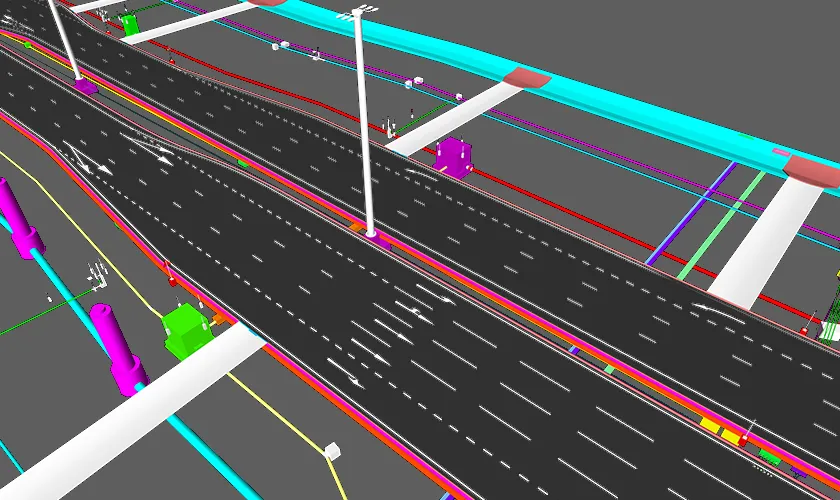
Endeion’s existing civil and infrastructure capabilities support clash detection for roads, bridges, tunnels, rail-related infrastructure, drainage, water systems, underground utilities, overhead utilities, and site development. BIM clash analysis can help project teams review utility crossings, structure-to-utility conflicts, road and drainage interfaces, tunnel service zones, retaining structures, and other spatial relationships before construction activities advance.
Model Audit and Coordination Review
A model audit can be paired with BIM clash detection to verify that the source models are suitable for coordination. This may include checking coordinates, model versions, file alignment, duplicated elements, gross geometry issues, and naming or organization problems that could distort clash results. Clean model inputs make automated clash detection BIM workflows more useful and reduce false positives.
BIM Clash Detection Process
A reliable BIM clash detection process is more than running one automated test. Endeion uses a structured workflow so results can be reviewed, communicated, resolved, and verified across project milestones.
- Project and Coordination Requirement Review: We review the BIM execution plan, discipline responsibilities, model maturity, file formats, coordination zones, tolerances, milestone dates, and expected reporting method.
- Model Collection and Federation: Current architectural, structural, MEP, civil, or utility models are aligned in a common coordination environment. Coordinates, levels, and model versions are checked before formal testing.
- Clash Rule and Tolerance Setup: Tests are organized by discipline pair, system category, zone, element type, and project-defined clearance. Tolerances are selected to reduce meaningless results while still capturing important conflicts.
- Automated Clash Detection: Clash detection BIM software is used to identify potential intersections and clearance issues across the selected models. Automation improves speed, but the raw results still require technical review.
- BIM Clash Analysis and Identification: The team groups duplicate or related clashes, separates modeling errors from construction conflicts, reviews severity, and prepares clear viewpoints or issue references for coordination.
- Issue Assignment and Coordination: Clashes are communicated to the responsible project stakeholders. Where Endeion is contracted for coordination support, approved adjustments can be incorporated into the relevant model or drawing package.
- Recheck and Status Tracking: Updated models are retested to confirm whether reported issues have been resolved, remain open, or have changed because of later design revisions.
- Final Coordination Reporting: Deliverables may include clash reports, issue logs, screenshots, viewpoints, federated models, or status summaries according to the agreed project workflow.
BIM Clash Detection Construction Conflict Resolution Strategies
Effective BIM clash detection construction conflict resolution strategies focus on resolving issues without creating new problems for adjacent systems. The correct response depends on system priority, engineering intent, available space, slope, clearance, installation sequence, access, and the authority of the team making the change.
- Prioritize fixed or difficult-to-relocate elements such as primary structure, major shafts, and large equipment when project standards require it.
- Review gravity-driven plumbing and drainage slopes before moving systems vertically.
- Protect required service and maintenance clearances around panels, valves, equipment, access doors, and control devices.
- Use sections and local 3D views to understand dense ceiling, riser, tunnel, or equipment-room conditions before changing routes.
- Group related clashes so one coordinated routing change can resolve several issues at once instead of treating every clash as an isolated problem.
- Document unresolved design decisions and route them to the responsible consultant, contractor, or owner rather than making assumptions in the model.
- Rerun clash tests after major model updates so previously resolved areas are not affected by later revisions.
These strategies make BIM coordination and clash detection a repeatable project-management process rather than a one-time software exercise.
Clash Detection BIM Software and Automation
Endeion’s live civil clash detection page identifies Navisworks, Revit, Civil 3D, and InfraWorks as part of its BIM and infrastructure workflow. The specific software used for a project depends on the discipline models, file formats, coordination requirements, and client environment.
Clash detection BIM software can automate large volumes of geometric comparisons, save test configurations, group results, and support recurring coordination reviews. BIM clash detection automation is especially useful on large projects with many disciplines and frequent model updates. However, automated clash detection BIM workflows do not determine design intent, trade priority, constructability, or whether a conflict is acceptable. Human review remains essential.
For this reason, Endeion combines automated model checking with technical BIM clash analysis. The objective is to provide project teams with organized, decision-ready information instead of an unfiltered list of software-generated clashes.
Typical Clash Detection Deliverables
Deliverables vary by project and should be defined before coordination begins. A clash detection service may include:
- Federated architectural, structural, MEP, civil, or utility coordination models
- Discipline-by-discipline clash test sets
- Hard-clash and clearance-clash reports
- Clash viewpoints, screenshots, or saved issue locations
- Issue logs with status, discipline, category, and review comments
- BIM clash identification summaries organized by zone or system
- Updated coordination models when model revisions are included in scope
- Recheck reports showing open, resolved, or newly introduced issues
- Coordination drawings, sections, or enlarged views when separately required
A clash report should not automatically be interpreted as engineering approval or confirmation that a model is fully construction ready. Final design acceptance, code compliance, and trade sign-off remain with the responsible project parties unless those responsibilities are specifically contracted.
Clash Detection Service in the USA
Endeion supports firms seeking BIM clash detection in the US for building and infrastructure projects. With headquarters in Virginia and additional delivery resources in Canada and India, Endeion can support USA project teams with model federation, clash testing, issue reporting, MEP coordination, civil coordination, and related BIM production services.
A clash detection service in USA projects often needs to align with existing BIM execution plans, contractor coordination meetings, project-specific tolerances, client naming standards, software versions, and submission milestones. Endeion defines these requirements during onboarding so the service fits the client’s established workflow rather than forcing a separate coordination process.
For organizations comparing BIM clash detection service providers, it is important to review not only software capability but also how the provider handles model quality, issue prioritization, revision control, responsibility boundaries, and communication with the project team.
Projects That Benefit from Expert Clash Detection
Expert clash detection is particularly valuable where several disciplines share constrained space, where model revisions occur frequently, or where field changes would be difficult or expensive. Endeion can support, subject to project scope and source documentation:
- Commercial offices, retail, mixed-use developments, and high-rise buildings
- Residential and multi-family projects with repeated service zones and vertical risers
- Healthcare, laboratory, institutional, and other MEP-intensive facilities
- Schools, universities, hospitality, and public facilities
- Industrial buildings, plants, warehouses, and equipment-intensive environments
- Roads, bridges, tunnels, transportation corridors, and civil infrastructure
- Water, drainage, underground utility, and overhead utility projects
- Renovation, retrofit, expansion, Scan-to-BIM, and existing-condition coordination projects
Why Choose Endeion for BIM Clash Detection Services?
Cross-Disciplinary BIM Capability
Endeion supports architectural, structural, MEP, civil, infrastructure, Point Cloud to BIM, shop drawing, and coordination workflows. This breadth helps the team understand how clash results connect to downstream modeling and documentation requirements.
Structured Clash Analysis
The focus is not simply the number of clashes detected. Endeion organizes results by discipline, location, severity, and coordination relevance so project teams can review meaningful issues more efficiently.
Software-Aligned Delivery
The team works with platforms used across Endeion’s BIM and civil workflows, including Revit, Navisworks, Civil 3D, and InfraWorks. Project file formats, software versions, and exchange requirements are confirmed before production.
Flexible Coordination Scope
Clients may need clash detection only, repeated model checks, MEP coordination, civil utility coordination, model updates, or coordinated drawing support. Endeion defines the required responsibilities and deliverables rather than treating every project as the same service package.
Quality and Responsibility Boundaries
Model inputs, tolerances, test sets, issue status, and revision cycles are documented. Endeion does not describe automated clash checking as a guarantee that a project is completely clash-free, code-compliant, or approved for construction without the appropriate project reviews.
FAQs About Clash Detection Services
What is clash detection in BIM?
In BIM, discipline models are combined or federated and tested against defined rules. Software identifies potential conflicts, and the coordination team reviews those results to determine which issues require modeling changes, design decisions, or trade coordination.
What are the main types of clashes in BIM?
The most common categories are hard clashes, where elements physically intersect; soft clashes, where clearance or access zones are violated; and workflow or constructability conflicts related to installation sequence, access, or coordination logic.
What is BIM clash identification?
BIM clash identification is the process of locating, classifying, and documenting potential conflicts in a federated model. Useful identification includes the disciplines involved, model location, issue type, severity, status, and supporting viewpoint.
Does clash detection automatically resolve conflicts?
No. Software can identify possible clashes, but resolution requires review of design intent, system priority, clearances, constructability, and project responsibilities. Changes should be approved by the appropriate project stakeholder before they are treated as final.
What software is used for clash detection?
Endeion’s current civil clash detection workflow references Navisworks, Revit, Civil 3D, and InfraWorks. The exact software used depends on the models, disciplines, file formats, and client workflow for a specific project.
Can Endeion provide MEP BIM clash detection services?
Yes. Endeion can support clash detection between HVAC, plumbing, mechanical piping, electrical, fire protection, architectural, and structural systems. Formal coordination, model revisions, and drawing outputs are defined separately in the project scope.
How often should BIM clash detection be performed?
Clash checks are most useful at planned coordination milestones and after meaningful model revisions. Frequency depends on project pace, model maturity, number of disciplines, and construction schedule. Fast-moving projects may require recurring reviews.
Does Endeion provide BIM clash detection in the US?
Yes. Endeion supports USA-based building and infrastructure projects from its Virginia headquarters, with additional delivery resources in Canada and India. Coordination standards, meeting cadence, software requirements, and deliverables are agreed during onboarding.
How is a clash detection service priced?
Pricing depends on project size, number of models and disciplines, model quality, coordination frequency, number of test sets, reporting requirements, revision cycles, software deliverables, and whether Endeion is also responsible for model updates or coordination drawings.
Areas We Serve
- Alabama
- Albany
- Arizona
- Atlanta
- Augusta
- Bakersfield
- Boston
- Brownsville
- Buffalo
- California
- Charlotte
- Chicago
- Cleveland
- Colorado
- Columbia
- Columbus
- Concord
- Connecticut
- Dallas
- Florida
- Georgia
- Hawaii
- Houston
- Illinois
- Indiana
- Kansas
- Kentucky
- Los Angeles
- Louisiana
- Maine
- Maryland
- Massachusetts
- Mississippi
- Missouri
- Montana
- Nebraska
- Nevada
- New Hampshire
- New Mexico
- New York
- North Carolina
- North Dakota
- Ohio
- Oklahoma
- Oregon
- Orlando
- Pennsylvania
- Portland
- Rhode Island
- Seattle
- South Carolina
- Texas
- Vermont
- Virginia
- Washington
- West Virginia
- Wisconsin