Mechanical 3D Modeling Services for Accurate, Production-Ready Design
Endeion provides mechanical 3D modeling services for companies that need clear, precise, and usable digital models of mechanical parts, assemblies, equipment, and spatial systems. We transform concepts, sketches, legacy drawings, point data, product specifications, and existing CAD files into structured 3D models that support design development, coordination, prototyping, fabrication planning, and technical communication.
Our work is built around the intended use of the model. A concept model requires a different level of detail than a component prepared for manufacturing review, a multi-part machine assembly, or a coordinated mechanical room. By defining geometry, file standards, tolerances, model relationships, and deliverables at the beginning, Endeion helps clients receive models that fit the next stage of their workflow rather than generic visual representations.
Whether your team needs a single mechanical component, a family of configurable products, a complex equipment assembly, or a coordinated plant-space model, our specialists develop consistent, reviewable, and revision-friendly outputs. The result is a stronger digital foundation for faster decisions, fewer misunderstandings, and more efficient project delivery.
What Are Mechanical 3D Modeling Services?
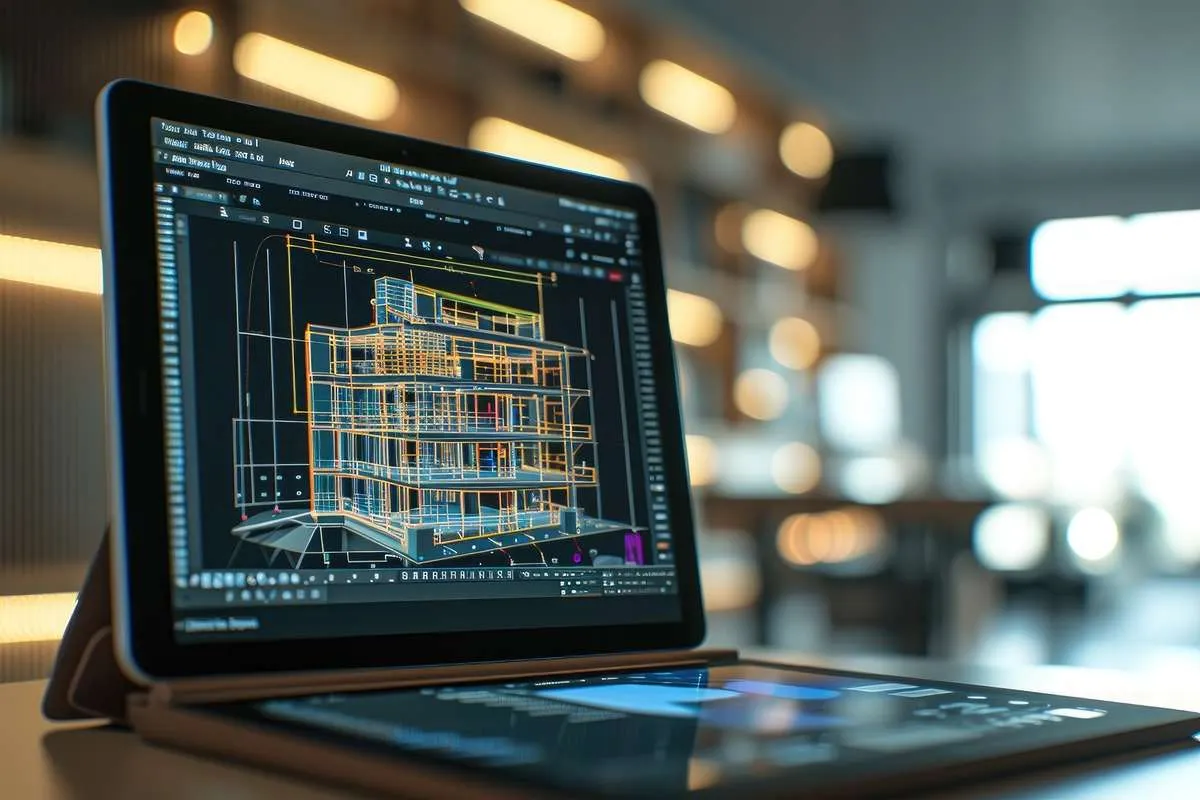
Mechanical 3D modeling services convert mechanical design information into digital three-dimensional representations of parts, products, machines, assemblies, or building-service systems. Depending on the project, the model may define external form, internal features, interfaces, component relationships, clearances, materials, configuration rules, and information needed for downstream drawings or documentation.
Unlike a basic visualization, an engineering-focused model is organized for a practical purpose. It may need to support fit review, design revisions, interference checks, exploded views, drawing production, bill of materials development, prototyping, fabrication planning, or integration with a larger coordinated model. That intended purpose determines the modeling method, level of detail, dimensional accuracy, and file format.
Endeion’s 3D mechanical modeling services can be used as a focused project resource or as an extension of an internal engineering team. We can develop new models, rebuild legacy geometry, update existing designs, prepare simplified coordination models, or create structured model sets for repeated product and project needs.
Why Mechanical 3D Models Improve Engineering and Project Delivery
Mechanical design decisions are easier to evaluate when teams can see how form, space, movement, and interfaces work together. A well-built 3D model gives stakeholders a common reference that is more informative than isolated 2D views. It helps engineering, production, procurement, construction, and client teams discuss the same geometry with less interpretation.
| Benefit | Description |
|---|---|
| Earlier Design Review | Teams can evaluate proportions, access, connection points, and component relationships before committing to physical production or installation. |
| Fewer Coordination Errors | Interferences, insufficient clearances, alignment problems, and inconsistent interfaces can be identified while revisions are still manageable. |
| Faster Iterations | Parametric and structured models allow controlled revisions without rebuilding every view or related component from the beginning. |
| Clearer Communication | Three-dimensional views, sections, and exploded representations help technical and nontechnical stakeholders understand design intent. |
| Stronger Documentation | Validated geometry can support drawings, schedules, assembly instructions, and model-based deliverables when included in the project scope. |
| Reusable Design Information | Approved models can become the basis for future variants, product families, replacement parts, coordination models, or updated documentation. |
Our Mechanical 3D Modeling Capabilities
Endeion tailors each scope to the geometry, intended use, and downstream requirements of the project. The following capabilities can be delivered individually or combined into a coordinated modeling package.
Mechanical 3D Parts Modeling Services
Our mechanical 3D parts modeling services create accurate digital representations of individual components, including machined parts, housings, brackets, fixtures, supports, shafts, enclosures, fittings, product components, and custom equipment elements. Models can be developed from dimensioned drawings, sketches, reference products, legacy CAD, redlines, or other approved source information.
For each part, we organize features and geometry according to the required workflow. Where the source data supports it, models can include holes, slots, fillets, chamfers, patterns, threads represented at an agreed level, sheet-metal features, mating interfaces, and configuration parameters. Our mechanical part 3D modelling services are particularly useful when teams need to convert older drawings into editable models, document replacement components, or create consistent part libraries for ongoing engineering work.
Assembly 3D Modeling Services
Assembly 3D modeling services bring separate components together into a complete virtual product, machine, skid, module, or equipment system. The assembly model shows how parts are positioned, constrained, connected, and accessed. This provides a practical environment for reviewing fit, sequence, clearance, and overall system organization before physical assembly begins.
Depending on the scope, Endeion can develop subassemblies, master assemblies, exploded views, simplified envelope models, and component hierarchies. Interference and clearance checks can be performed against defined criteria, helping teams identify conflicts such as overlapping geometry, inaccessible fasteners, insufficient service space, or mismatched connection points. Assembly outputs can also support presentations, technical reviews, documentation, and downstream production planning.
Parametric and Configurable Modeling
Parametric models use dimensions, constraints, formulas, and feature relationships to control geometry. This makes them valuable for products or components that require repeated sizes, options, or design revisions. Instead of treating every variation as a separate model, a structured approach can preserve design logic and make approved changes easier to manage.
We define the parameters that matter to the project, such as length, width, height, connection locations, pattern counts, or component selections. The level of configurability is agreed before modeling so the final model remains stable, understandable, and practical for the client’s software environment.
Solid, Surface, and Hybrid Modeling
Different forms require different modeling techniques. Solid modeling is appropriate for many mechanical components because it defines closed volumes and supports feature-based editing. Surface modeling is useful for complex contours, transitions, ergonomic forms, aerodynamic profiles, molded products, and geometry where continuity and shape control are central. Hybrid models can combine solid and surface methods where the design requires both.
Endeion selects the method based on source quality, geometric complexity, expected revisions, and downstream use. This avoids unnecessary model complexity while preserving the accuracy and editability required for the project.
2D-to-3D CAD Conversion
Many organizations have valuable engineering information stored in 2D drawings, scanned documents, PDFs, or legacy files. We convert approved source information into organized three-dimensional models that improve visualization and create a more adaptable foundation for future work. The process includes reviewing dimensions, identifying missing or conflicting details, establishing assumptions, and documenting items that require client confirmation.
The converted model can be supplied with matched views, sections, or updated drawings when included in the project. This service is useful for product modernization, design reuse, archive conversion, replacement-part planning, and the transition from drawing-based workflows to model-based engineering.
Mechanical Room 3D Modeling Services
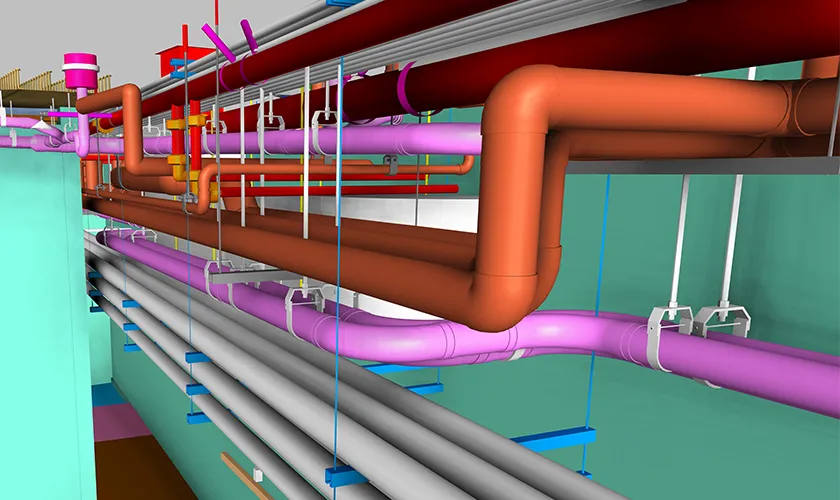
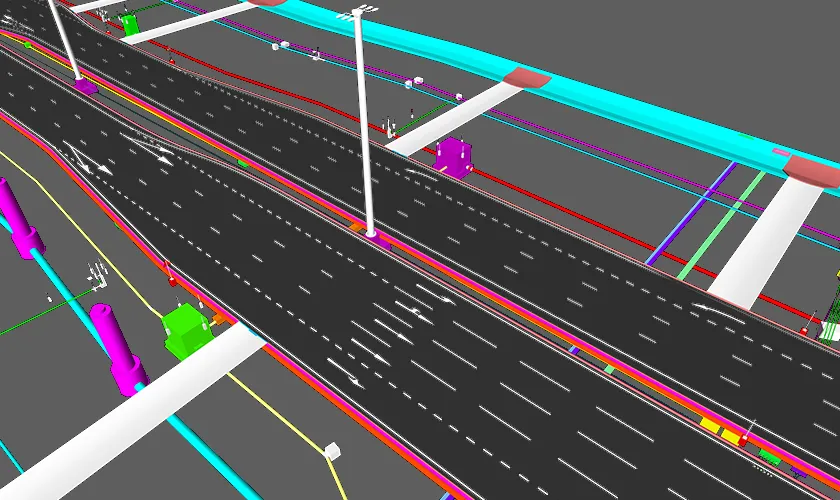
For building and infrastructure projects, mechanical room 3D modeling services focus on the spatial coordination of equipment, piping, ductwork, valves, supports, access zones, and related systems within dense plant spaces. These projects differ from product modeling because the model must respond to building geometry, multidisciplinary coordination, installation constraints, and maintenance access.
Endeion can model mechanical rooms from design documents, contractor inputs, equipment submittals, coordination backgrounds, and existing-condition information supplied by the client. The scope may include equipment placement, connection routing, service clearances, clash review, installation planning, and coordinated views. Detailed mechanical room work can also be linked to Endeion’s dedicated MEP coordination, shop drawing, and mechanical room modeling capabilities where a construction-focused deliverable is required.
Engineering 3D Modelling Services and Technical Documentation
Our engineering 3D modelling services can be paired with documentation that helps teams use the model effectively. Depending on the agreed scope, deliverables may include orthographic views, sections, details, isometric views, exploded views, component callouts, assembly diagrams, drawing sheets, model schedules, or bill of materials support.
Documentation requirements are established at project kickoff because a model intended only for review differs from one that must support fabrication or formal release. Endeion does not assume that a visually complete model is automatically manufacturing-ready. Required tolerances, standards, annotations, approvals, and production information must be defined and validated as part of the project scope.
Typical Mechanical 3D Modeling Deliverables
Deliverables are selected according to how the client plans to review, modify, coordinate, manufacture, install, or archive the information. A project may include one or several of the following outputs.
| Deliverable | Purpose | Typical Content |
|---|---|---|
| Individual Part Models | Component development and review | Feature-based or direct geometry, interfaces, approved material or metadata fields. |
| Assembly & Subassembly Models | Fit, relationship, and interference review | Component hierarchy, constraints, positions, simplified or detailed representations. |
| Parametric Model Families | Controlled size or configuration changes | Dimensions, rules, options, reusable features, and named parameters. |
| Surface Models | Complex form and contour development | Continuous surfaces, transitions, trimmed geometry, and hybrid solid-surface models. |
| Mechanical Room Models | Spatial coordination and installation planning | Equipment, piping, ductwork, valves, supports, clearances, and coordinated backgrounds. |
| Exploded & Isometric Views | Communication and assembly understanding | Separated components, sequence views, callouts, and orientation references. |
| 2D Drawings & Sections | Technical documentation | Views, dimensions, details, notes, sections, and title-block information as defined in the project scope. |
| File Conversion & Model Cleanup | Workflow continuity and reuse | Native model files, neutral formats, reorganized geometry, naming conventions, and layer cleanup. |
Our Mechanical 3D Modeling Process
A reliable model begins with clear inputs and a defined use case. Endeion follows a structured workflow that keeps requirements, assumptions, reviews, and revisions visible throughout the engagement.
1. Project Discovery and Scope Definition: We identify what is being modeled, why the model is needed, who will use it, what level of detail is appropriate, which software and formats are required, and what supporting documentation must be delivered.
2. Source File and Reference Review: Our team reviews drawings, sketches, dimensions, product data, existing models, point information, markups, and client standards. Conflicts, omissions, and uncertain dimensions are recorded for clarification instead of being silently assumed.
3. Modeling Strategy: We determine whether the project requires solid, surface, parametric, assembly, simplified coordination, or hybrid modeling. We also define naming, file structure, origin points, units, and model breakdown.
4. Initial Model Development: The geometry is created in logical stages. For assemblies, components and subassemblies are organized to preserve relationships. For spatial projects, the model is aligned to the agreed project coordinates and backgrounds.
5. Technical Review and Coordination: Models are checked against available dimensions, source documents, interfaces, and scope requirements. Assembly projects can include interference review, while mechanical room projects can include defined clearance and coordination checks.
6. Client Review and Controlled Revisions: Review files are issued at agreed milestones. Client comments are consolidated, tracked, and incorporated according to the revision allowance and change-control process.
7. Quality Control and Final Delivery: Before delivery, Endeion reviews model completeness, file organization, naming, units, geometry integrity, required views, and requested formats. The approved package is then issued with relevant notes or assumptions.
Choosing the Right Model Type for Your Project
Mechanical modeling projects often use similar software but solve very different problems. Clarifying the model type prevents over-modeling, missing information, and deliverables that do not fit the next workflow.
| Model Type | Primary Focus | Common Uses | Key Review Questions |
|---|---|---|---|
| Part Model | One component | Design refinement, replacement, documentation, and prototyping. | Are dimensions, interfaces, features, and revisions controlled? |
| Assembly Model | How multiple parts work together | Fit review, clash review, exploded views, and system documentation. | Do parts align, move, connect, and remain serviceable as intended? |
| Surface Model | Complex form and continuity | Molded products, housings, ergonomic, or aerodynamic geometry. | Are transitions, curvature, and manufacturable boundaries appropriate? |
| Mechanical Room Model | Equipment and systems within a building space | Coordination, installation planning, access, and maintenance review. | Are systems clash-free, accessible, coordinated, and aligned to project conditions? |
Mechanical Room Modeling for Dense and High-Value Spaces
Mechanical rooms, utility spaces, equipment skids, and plant areas concentrate many systems into limited space. A conflict that seems minor in an isolated view can affect installation sequence, valve operation, equipment removal, insulation, access platforms, structural supports, or future maintenance. A coordinated model allows teams to evaluate these relationships before work reaches the field.
Endeion’s mechanical room 3D modeling services can support new construction, renovation, retrofit, prefabrication planning, and as-built documentation. Inputs may include architectural and structural backgrounds, mechanical design drawings, equipment submittals, fabrication content, field measurements, or point-cloud information supplied under a separate scope. The model can be developed to the project’s required level so teams can review routing, connection points, equipment orientation, access zones, and trade interfaces.
Because detailed construction coordination can involve discipline-specific requirements, we establish responsibilities clearly. The project team retains responsibility for engineering decisions, equipment selection, code compliance, and final approval unless those professional services are expressly included. Endeion’s role is to create and coordinate accurate digital information from the approved project inputs.
Benefits of Outsourcing 3D Mechanical Modeling Services
Outsourcing can provide focused capacity when internal teams face peak workloads, legacy conversion programs, specialized geometry, or repeated documentation needs. The value comes from a well-defined workflow, not simply transferring drafting hours. Endeion works to make responsibilities, inputs, reviews, file standards, and acceptance criteria clear from the start.
Scalable Project CapacityAdd modeling support for a single assignment, a large model conversion, or an ongoing engineering program without permanently expanding internal production resources. | Consistent Model StandardsUse agreed templates, naming conventions, units, origins, parameters, and file structures across repeated components or project packages. |
Reduced Internal Production LoadAllow in-house engineers and project managers to focus on design decisions, approvals, client coordination, and manufacturing strategy. | Improved Legacy Data UseConvert older drawings and fragmented files into structured models that are easier to review, update, and reuse. |
Defined Review MilestonesReceive planned submissions for technical review rather than discovering major interpretation issues only at final delivery. | Flexible Output PackagesCoordinate native and neutral files, drawings, views, model breakdowns, and documentation according to the client's downstream workflow. |
Industries and Applications We Support
Mechanical modeling requirements vary by industry, but the need for accurate geometry and clear model intent remains consistent. Endeion adapts its workflow to each client’s source information, standards, review process, and delivery environment.
Product Manufacturing and General Engineering
We model components, fixtures, equipment, product variants, enclosures, subassemblies, and complete mechanical systems for development, review, documentation, and production planning. Projects may involve new designs, updates to existing products, or conversion of legacy engineering information.
Industrial Machinery and Equipment
Industrial applications can include frames, guards, process equipment, material-handling components, skids, platforms, machine assemblies, and replacement parts. Assembly structure and access are especially important where equipment must be installed, serviced, or modified in an operating facility.
Automotive and Mobility Components
Mechanical models can support component development, packaging studies, brackets, housings, interior mechanisms, fixtures, aftermarket products, and equipment used in vehicle-related manufacturing. The scope and validation criteria are tailored to the client’s design and production requirements.
Aerospace and Precision Products
Projects involving complex forms, controlled interfaces, lightweight assemblies, or precision components may require carefully structured solid and surface geometry. Endeion models from client-approved requirements and provides traceable review stages for high-detail work.
Construction, MEP, and Prefabrication
Building projects use mechanical models for equipment rooms, modular assemblies, prefabricated components, coordination, installation views, and documentation. These applications can connect with Endeion’s MEP BIM, coordination, shop drawing, and digital prefabrication services when broader project delivery support is required.
Consumer Products and Custom Equipment
For appliances, housings, mechanisms, fixtures, and market-facing products, models may need to balance function, assembly, ergonomics, and appearance. Surface and parametric methods help teams evaluate options before committing to prototypes or tooling.
Mechanical 3D Modeling Services in US Project Workflows
Endeion provides mechanical 3D modeling services in US project workflows through its Virginia headquarters and distributed technical delivery resources. U.S. clients can use our team for project-based modeling, overflow capacity, drawing conversion, assembly development, and coordinated mechanical work while retaining their existing engineering and approval processes.
At kickoff, we establish communication channels, working hours, review responsibilities, software versions, file-transfer methods, and milestone dates. This is especially important when our team is supporting an internal department, manufacturer, consultant, contractor, or multidisciplinary project team. Clear handoffs help protect model consistency and keep comments from becoming fragmented across email, markups, and multiple file versions.
For clients seeking mechanical 3D modeling services in US markets, Endeion can also align deliverables with project-specific title blocks, naming systems, folder structures, units, client templates, and internal review procedures. Compliance, engineering approval, and manufacturing release remain subject to the standards and responsibilities defined by the client and project contract.
Quality Control for Mechanical 3D Models
Quality control is not limited to checking whether the model opens. The review must reflect the model’s intended use and the source information provided. Endeion develops a project-specific checklist so the final package can be evaluated consistently.
- Geometry review against approved drawings, dimensions, sketches, and reference files
- Verification of units, origins, orientation, coordinates, and model scale
- Feature, component, and file naming checks based on agreed client standards
- Review of assembly hierarchy, constraints, component placement, and defined interferences
- Inspection for duplicate, missing, disconnected, or visibly corrupted geometry
- Confirmation that required views, sections, configurations, and output formats are included
- Cross-checking of revision comments and documented assumptions before final issue
- Opening and review of exchange files where neutral-format delivery is required
Some checks depend on information that only the client, engineer of record, manufacturer, or equipment supplier can approve. Endeion identifies these approval points rather than presenting modeling review as a substitute for professional engineering validation, physical testing, or manufacturing inspection.
Why Choose Endeion for Mechanical 3D Modeling?
Engineering-Informed ModelingOur team approaches the work as technical information development, with attention to interfaces, model use, documentation, and downstream coordination. | Customized Scope & DetailWe do not apply one modeling level to every project. Geometry, metadata, drawings, and review steps are matched to the required project outcome. |
Parts, Assemblies & Spatial SystemsEndeion supports individual components, complex assemblies, mechanical equipment, product families, and coordinated mechanical spaces. | Clear Assumption ManagementMissing or conflicting source information is documented for client review, ensuring the final model reflects informed engineering decisions. |
Structured Quality ReviewsModels are reviewed for geometry, organization, required data, comments, and project deliverables before final submission. | Connected CAD & BIM CapabilitiesClients can extend projects into part modeling, assembly modeling, surface modeling, drafting, MEP coordination, mechanical rooms, shop drawings, and related BIM services. |
Whether the requirement is mechanical part 3D modelling services for a single component or engineering 3D modelling services for a larger product or project program, Endeion develops the workflow around practical use. Our goal is to deliver a model package that your team can review, understand, and move forward with confidently.
Frequently Asked Questions About Mechanical 3D Modeling Services
What information is needed to begin a mechanical 3D modeling project?
Useful inputs include dimensioned drawings, sketches, PDFs, product specifications, photographs, existing CAD files, equipment data, point information, markups, client standards, and a description of how the model will be used. Endeion reviews the available information and identifies missing dimensions, unclear interfaces, or approval items before full production begins.
Can Endeion create 3D models from 2D drawings or legacy files?
Yes. Endeion can convert approved 2D drawings, scanned documents, PDFs, and legacy CAD information into structured 3D models. The quality and completeness of the final model depend on the source information. Where details conflict or are missing, we document questions and assumptions for client confirmation.
What is included in mechanical 3D parts modeling services?
Mechanical 3D parts modeling services can include solid or surface geometry, features, interfaces, holes, patterns, simplified threads, configurations, approved properties, and associated views or drawings. The exact deliverables depend on whether the part is needed for design review, prototyping, coordination, manufacturing planning, documentation, or reuse in an assembly.
How are assembly 3D modeling services different from part modeling?
Part modeling focuses on one component. Assembly 3D modeling services combine multiple parts and define how they are positioned, connected, constrained, accessed, or moved within a complete system. Assembly work can also include subassemblies, interference checks, exploded views, component hierarchies, and documentation support.
Does Endeion provide mechanical room 3D modeling services?
Yes. Endeion models mechanical rooms and other dense equipment spaces using project drawings, backgrounds, submittals, and approved coordination inputs. The model can support layout review, clash coordination, access planning, installation discussions, renovation planning, and related construction documentation, depending on the scope.
Which file formats can be delivered?
Deliverable formats are agreed during scoping and depend on the authoring platform and intended use. Projects may include native CAD or BIM files, neutral exchange formats, review files, PDFs, images, drawings, or model packages. Endeion confirms software versions and exchange requirements before production to reduce compatibility issues.
Are Endeion’s models automatically ready for manufacturing?
Not every 3D model is automatically manufacturing-ready. Production release may require approved tolerances, GD&T, materials, finishes, process allowances, supplier requirements, engineering approval, and physical validation. Endeion defines which of these items are included and clearly distinguishes design or visualization models from formally released manufacturing documentation.
Can Endeion support ongoing or high-volume modeling requirements?
Yes. Endeion can provide project-based or ongoing 3D mechanical modeling services for repeat components, assemblies, drawing conversion, product families, and engineering backlogs. A pilot package can be used to confirm standards, file structure, communication, review timing, and acceptance criteria before scaling the engagement.
Areas We Serve
- Alabama
- Albany
- Arizona
- Atlanta
- Augusta
- Bakersfield
- Boston
- Brownsville
- Buffalo
- California
- Charlotte
- Chicago
- Cleveland
- Colorado
- Columbia
- Columbus
- Concord
- Connecticut
- Dallas
- Florida
- Georgia
- Hawaii
- Houston
- Illinois
- Indiana
- Kansas
- Kentucky
- Los Angeles
- Louisiana
- Maine
- Maryland
- Massachusetts
- Mississippi
- Missouri
- Montana
- Nebraska
- Nevada
- New Hampshire
- New Mexico
- New York
- North Carolina
- North Dakota
- Ohio
- Oklahoma
- Oregon
- Orlando
- Pennsylvania
- Portland
- Rhode Island
- Seattle
- South Carolina
- Texas
- Vermont
- Virginia
- Washington
- West Virginia
- Wisconsin