




Table of Contents
Choosing a BIM provider starts with understanding how their work will support your project. A model should give architects, engineers, contractors, and owners useful information for reviewing designs, coordinating systems, and preparing documentation.
To find reliable BIM services near me in Los Angeles, define your requirements, review comparable project experience, evaluate modeling and coordination processes, and compare detailed proposals. Confirm deliverables, quality checks, revisions, communication, and final file access before hiring a company.
Whether you are planning a new development, coordinating a commercial interior, or renovating an existing property, the right provider should understand your project’s challenges and explain how they will address them. The following guide covers the services to consider and the practical checks that can help you make an informed decision.
What BIM Services in Los Angeles Does Your Project Need?
Building Information Modeling, or BIM, is a process for developing and managing digital building information. A BIM model combines three-dimensional geometry with information about components, helping teams understand spatial relationships and work from organized project data.
The services you need depend on your project stage, available information, and intended use of the model.
Architectural and Structural BIM Modeling
Architectural models can represent spaces, walls, doors, windows, floors, and ceilings. Structural models can include foundations, columns, beams, slabs, and other structural elements.
These models may support design reviews, interdisciplinary coordination, and documentation. Before commissioning the work, confirm which elements will be included and what information they must contain.
For example, a model developed for an early layout review may have different requirements from one used to prepare detailed drawings. Defining its intended purpose helps prevent unnecessary work and missing information.
MEP BIM Modeling and Coordination
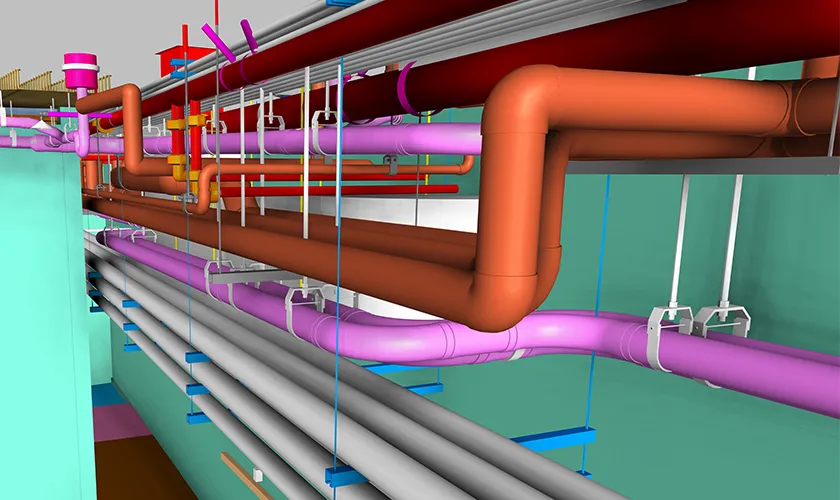
Mechanical, electrical, and plumbing models help teams review building services within the available space. Coordination brings these models together with architectural and structural information to identify issues requiring attention.
Consider a corridor ceiling containing ductwork, piping, cable trays, and structural beams. A combined model can help the team examine how these elements fit together and identify locations where routing changes may be required.
The provider’s scope should explain who identifies issues, who makes design decisions, and how approved changes are checked.
BIM Documentation
Documentation services may include model-based drawings, schedules, and other agreed outputs.
Confirm which documents you will receive, who will review them, and how updates will be reflected across the model and drawing package. Consistency matters when several participants depend on the same information.
Point Cloud to BIM
Point cloud to BIM services use laser scan data to develop models of existing conditions. This can support renovations, space assessments, and coordination between new work and existing building elements.
Agree on the included components, modeling tolerances, and treatment of conditions that cannot be verified. Concealed services or inaccessible spaces may require additional information.
BIM Consulting and Project Standards
BIM consulting can help establish modeling standards, information requirements, execution plans, and collaboration procedures.
This support is useful when several organizations need to exchange models consistently. Clear standards can define naming conventions, file formats, review responsibilities, and delivery milestones before production begins.
When evaluating BIM services in Los Angeles, connect each proposed service to a specific project need. Your provider should explain what the deliverable will help your team review, coordinate, or document.
How to Choose Reliable BIM Services in Los Angeles
A dependable provider should demonstrate relevant experience and offer a clear process for delivering the work. Use the following checks to evaluate your shortlist.
Prepare a Clear Project Brief
Give each provider the same brief so their proposals can be compared fairly.
Include:
- Project location and building type
- Approximate building area and scope
- Current design or construction stage
- Required modeling disciplines
- Available drawings, models, surveys, or scan data
- Intended model uses and expected deliverables
- Required software versions and file formats
- Delivery deadlines and review periods
Explain any known challenges, such as incomplete existing drawings, restricted ceiling spaces, or phased construction.
Discuss the required Level of Development, commonly called LOD, alongside element-specific information requirements. Equipment dimensions, maintenance clearances, and asset data should be defined according to how the model will be used.
Review Relevant Project Experience
Ask for examples involving similar buildings, disciplines, or coordination challenges.
A multifamily project may require experience with repeated layouts and shared services. A commercial fit-out may involve existing-system connections and limited ceiling space. A renovation may depend on interpreting incomplete records.
Request evidence beyond finished model images, such as drawing samples, coordination reports, or anonymized issue records.
Ask the provider:
- What was your responsibility on this project?
- Which disciplines did your team model or coordinate?
- What source information did you receive?
- How were assumptions and questions recorded?
- Who reviewed the deliverables?
- How did you manage revisions?
These questions help establish whether the experience is relevant to your requirements.
Check How Coordination Issues Are Resolved
Coordination should include a process for moving issues toward resolution.
Ask how the provider combines models, establishes tolerances, prioritizes findings, assigns actions, and verifies changes. Confirm who approves modifications affecting the design.
Maintenance and access requirements also deserve attention. Equipment can fit within a room while leaving insufficient space for servicing. Ask whether the agreed checks include required clearance zones and installation constraints.
If a provider promises a “clash-free” model, clarify which systems, model versions, and tests are covered. Defined acceptance criteria help everyone understand the scope of the review.
Evaluate Model Quality Control
Reliable BIM services in Los Angeles should include appropriate checks before deliverables are issued.
Depending on the scope, reviews may cover:
- Coordinates, levels, and alignment
- Element placement and dimensions
- Naming conventions and model organization
- Required component information
- Linked files and references
- Consistency between drawings and models
- Outstanding assumptions and unresolved questions
Ask who performs these checks and how corrections are verified.
For existing-building projects, confirm how the provider distinguishes verified conditions from assumptions. This allows your team to identify where further measurements or field verification are needed.
Confirm Communication and Local Support
A local office can be helpful when frequent site visits or in-person meetings are required. Remote support can also work when the team provides suitable availability and dependable collaboration.
Confirm your main contact, meeting frequency, response expectations, and procedures for urgent issues. If staff work across time zones, establish sufficient overlap with your Los Angeles team.
Also clarify responsibility for scanning, field measurements, and site verification. These activities may be separate from modeling services.
Compare Proposals by Scope and Value
When comparing BIM services in Los Angeles, review what each proposal includes before assessing the price.
| Proposal Item | What to Confirm |
|---|---|
| Modeling scope | Included disciplines, elements, and project areas |
| Deliverables | Models, drawings, schedules, exports, and reports |
| Coordination | Meetings, review cycles, and issue tracking |
| Revisions | Included updates and additional fee triggers |
| Schedule | Milestones, dependencies, and review periods |
| Quality control | Review responsibilities and acceptance criteria |
| Handover | Final files, access, and reuse rights |
Costs depend on project complexity, source information, required development, coordination effort, and deadlines. Similar floor areas can involve different workloads, particularly when renovation records are incomplete.
Request clearly stated assumptions and exclusions. Confirm how late design changes or new information will affect the fee and schedule.
Recognize Warning Signs
Look carefully at proposals that contain vague deliverables or firm commitments made without reviewing your inputs.
Other warning signs include unclear portfolio responsibilities, undefined revision allowances, no named project contact, and uncertain final file access.
Ask follow-up questions before making a decision. The provider’s answers can reveal whether they understand the work and have a practical process for completing it.
Finalize Responsibilities Before Starting
Before hiring a provider, agree on modeling requirements, deliverables, approvals, milestones, coordination procedures, and change management.
For a complex engagement, consider a paid pilot covering a representative project area. It can show how the team interprets information, communicates questions, and responds to review comments.
The best BIM services in Los Angeles for your project will combine relevant capability with a clearly defined delivery process.
Choose the Right BIM Partner for Your Los Angeles Project
Choosing reliable BIM services in Los Angeles starts with reviewing relevant experience, quality control, coordination procedures, and communication. Compare proposals carefully so you understand the deliverables, revision allowances, deadlines, and access to final files.
Before hiring a provider, share your project requirements and ask how their team will address your specific challenges. A clear scope and well-defined responsibilities can help establish a productive partnership and deliver building information your team can confidently use.
